Phramahathat Nabhamethanidol
Phramahathat Nabhamethanidol.
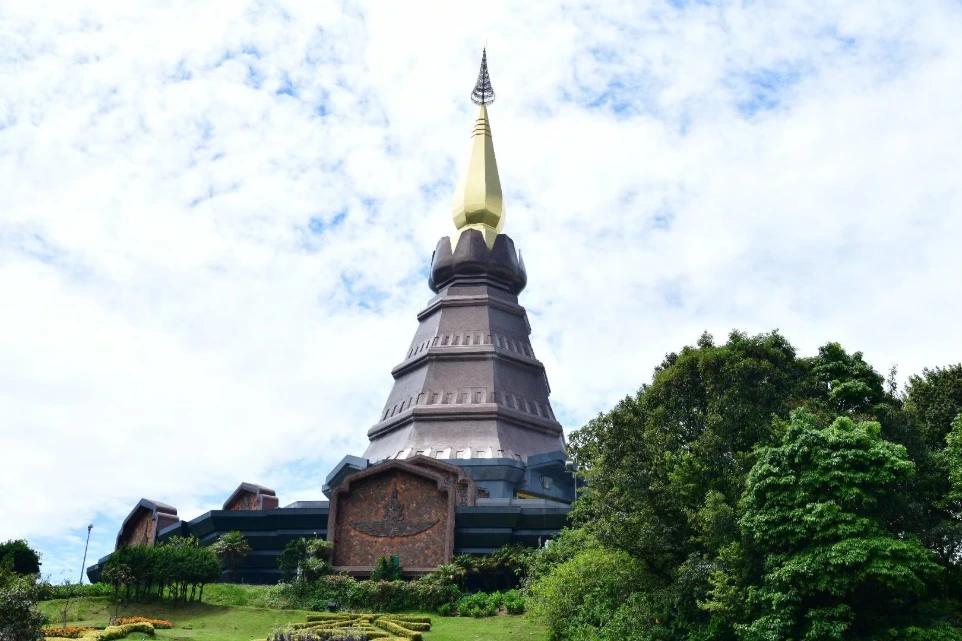
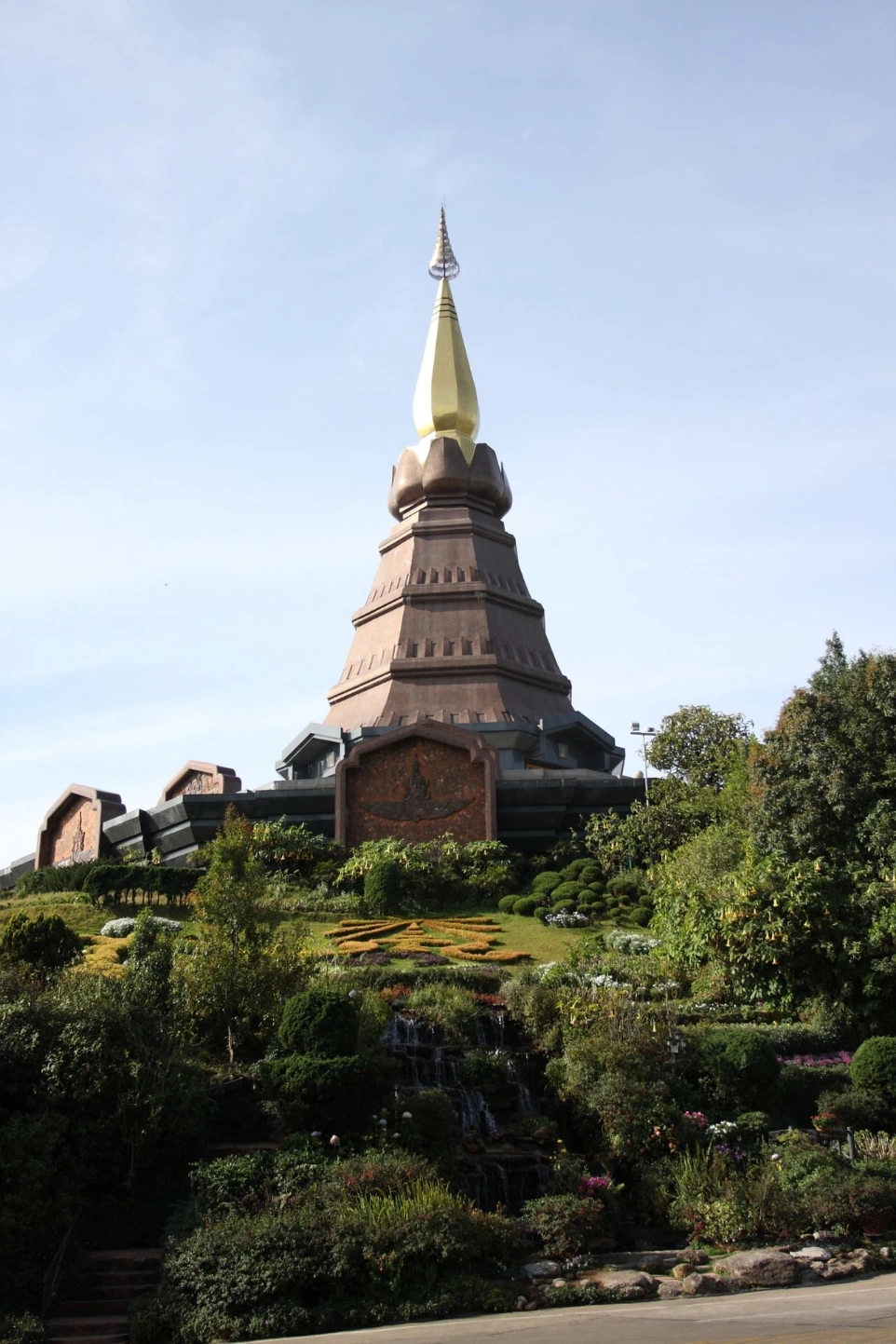
"The construction of the Air Force stupa dedicated as a royal merit has been named as requested by the Air Force 'Phramahathat Nabhamethanidol', which translates to a stupa that houses the great relics as vast as the sky above and the earth below."
History
The Royal Thai Air Force has chosen the peak of Doi Inthanon, which is the highest mountain in Thailand, as the site for the construction of the stupa. Later, the King graciously bestowed the name, as requested by the Air Force, "Phra Mahathat Dhamma Metadon," which translates to the stupa that enshrines the relics of the Buddha, reaching up to the heavens.
Background
Request for permission to use the area for construction
Subsequently, the Department of Forestry sent the matter to the Chiang Mai Provincial Forestry Office to verify the information for presentation to the National Park Committee for consideration of permission. When the Department of Forestry did not receive the details as requested, this matter was brought up for discussion at the National Park Committee meeting No. 3/2529 on July 17, 1986, where the committee considered and agreed in principle to allow the Royal Thai Air Force to construct a stupa to house the relics at the requested location. Additionally, the Royal Thai Air Force sent further details to the Department of Forestry on September 5, 1986. Later, the Royal Thai Air Force also sent a letter dated October 4, 1986, proposing an environmental impact assessment report for the stupa construction project housing the relics in Doi Inthanon National Park for the Secretary-General of the Environmental Committee to consider. The National Environmental Committee informed the Director-General of the Department of Forestry on January 20, 1987, that it had approved the report proposing measures to prevent and reduce environmental impacts, along with follow-up measures.
Preparation of the area for leveling the ground, construction of a parking lot, and a bridge.
Resting on this hillside is very difficult because in June, it rains almost every day, along with strong winds of 40-50 knots. There is a constant drizzle, forcing workers to wear jackets all day. On rainy days, they have to find shelter under temporary huts. Using machinery to clear the area is also risky due to the fear of accidents. Refueling requires people to carry fuel from the road up the hill because the temporary path is slippery, and vehicles cannot go down to refuel.
The construction involves about 10 technicians and approximately 12 laborers, along with about 25 supervisors. Work starts at 7:30 AM and ends at 5:00 PM, but sometimes they may work until 8:00 PM. During this time, there is some rain, but not enough to hinder the work. They began digging the first foundation pit, pouring concrete for the foundation, and setting up columns to support the bridge from sections 1, 2, and 3 until reaching the fourth or final foundation pit. Once the foundation pit is dug, they need to place steel mesh as reinforcement for the foundation. The steel mesh has been tied together and requires about 8 people to lift it, so they use an excavator instead. Each time they lift, using the excavator to lift the steel mesh is challenging because it is 2.50 meters wide and 7 meters long. If not lifted correctly, it may swing due to the height of the excavator's boom and the steel cable hanging down to the steel. The workers collaborate to manage the lift until it is completed and must place it in the foundation pit, which is about 20 meters away.
Meaning in shapes and components.
Project operations.
Timeline of the Phra Mahathat Chedi at Doi Suthep
Background
Air Chief Marshal Prabhan Thupatemi, the Commander of the Air Force at that time, conceived the idea of building a stupa in the Doi Inthanon area.
Establishment of a working group
Appoint the construction committee for the stupa containing the relics of the Buddha.
Construction of Phra Mahathat Nopphametdil begins.
Laying of the foundation stone ceremony.
The foundation stone ceremony was held as scheduled at 10:49 AM.
Construction of Phra Mahathat Noppholmetdil is completed.
The name of the stupa is granted.
The name of the stupa containing the relics of the Buddha is granted as “Phra Mahathat Nopphametdil,” which means the stupa containing the great relics as vast as the sky and the earth.